Human Fortune
- 4.0
- Rating
- 1.00M
- Installs
- Free
- Price

 Analysis by App-foxy
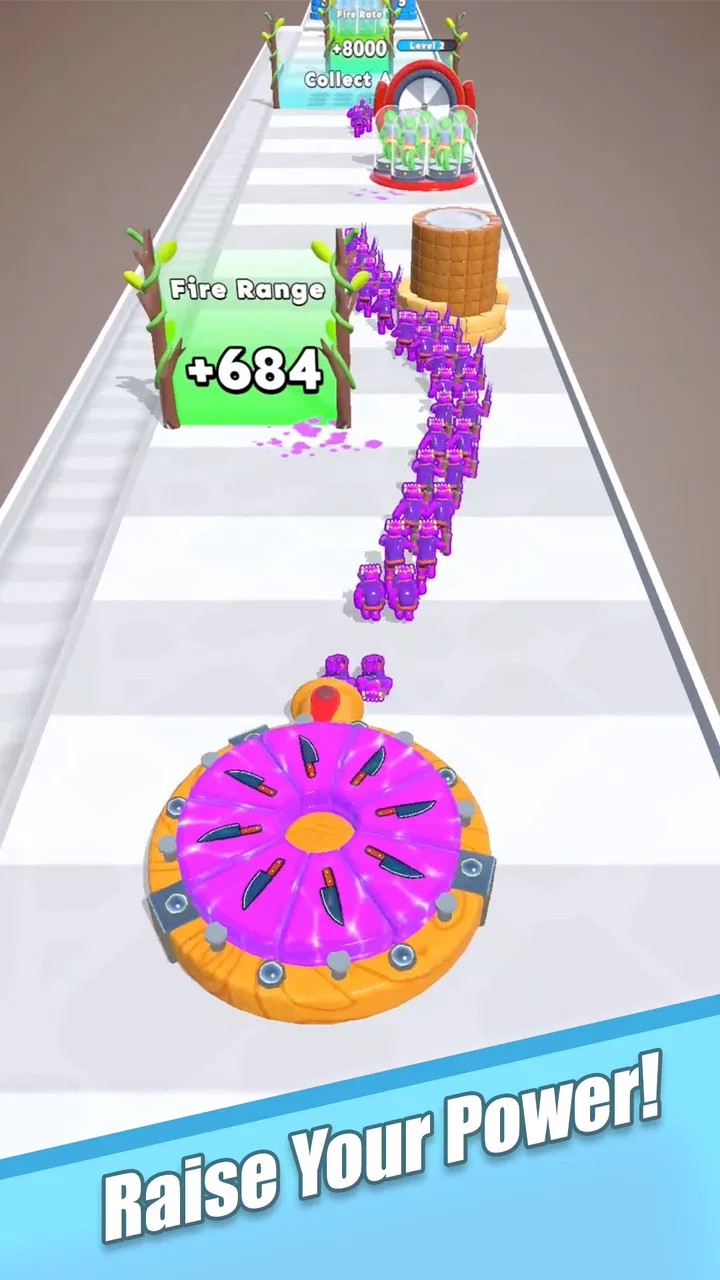
Human Fortune is a free action game built around a simple question: how lucky do you feel? I spent time with it expecting a quick, low-pressure distraction, and that is where it makes the most sense. It is easy to pick up, does not ask me to learn a complicated control scheme, and works best when I want a short burst of play rather than a deep campaign. The store summary, “Feeling lucky?”, captures the mood, while the short description, “Human Fortune,” gives the game an intentionally compact identity.
That simplicity is both its appeal and its main limitation. I would recommend it to someone who enjoys casual action games with an element of chance and likes repeating short sessions to see how things unfold. I would not choose it for a player looking for a large world, a detailed story, competitive depth, or a long-term progression system with lots of strategic layers. Human Fortune is more about the moment-to-moment decision to try again than about building a complex personal playstyle.
How Human Fortune feels in a normal play session
The easiest way to approach Human Fortune is to treat it as a game for the gaps in your day. I can imagine opening it while waiting for a friend, taking a short break from work, or looking for something lighter after a demanding game. The action category suggests energy rather than quiet puzzle solving, but the overall experience remains approachable. It does not feel like a title that requires a long preparation period before the fun starts.
You May Also Like

 Blood Strike: 2.5 Anniversary
Blood Strike’s Loadouts Turn Every Drop Into a Tactical Gamble
A close look at Blood Strike’s custom loadouts: how fast access to signature weapons reshapes its battle royale rhythm, rewards preparation, and narrows the gap between fights.

 Pandora - Music & Podcasts
Pandora’s Music Is Easy to Start, but Harder to Recover
Pandora’s strength is its low-effort path from a seed to a station. Its weak spot is how much confidence it asks you to place in connection, setup, and quiet recovery.

 8 Ball Pool
 Is Built on Rivalries, Rematches, and Routine
A close look at the rivalries, rematches, shared routines, and unanswered safety questions that turn a quick pool match into a persistent mobile community.

 Samsung Music
’s Quiet Strength Is Playing What You Already Own
Its reach comes less from spectacle than from dependable access to a personal library. That simplicity is both the app’s strongest retention engine and its ceiling.

 AccuWeather: Weather Radar
AccuWeather Review: A Quick, Clear Forecast for Everyday Decisions
For everyday plans, the best forecast is the one you can understand quickly. AccuWeather makes rain timing, radar, and local conditions easy to act on, with a few trade-offs.

 Hill Climb Racing
Why Hill Climb Racing Still Turns Crashes Into One More Run
A tiny car, a bumpy hill and one more upgrade: Hill Climb Racing keeps resurfacing because its simple chaos makes every near-miss feel personal.
More From Our News Desk
View All News


My baseline routine is straightforward. I open the game, take a moment to understand what the current screen is asking me to do, and then focus on making the next sensible move instead of trying to predict everything. That mindset matters because a luck-oriented game can become frustrating if I treat every result as something I should have controlled. Human Fortune is more enjoyable when I accept that some attempts will go my way and others will not.
For a first-time player, I suggest playing several short rounds before deciding whether it is a good fit. A single unlucky attempt can make the experience feel flatter than it really is, while one unusually successful run can create expectations the game may not always meet. Looking at the rhythm across multiple sessions gives a fairer impression of how much repetition you personally enjoy.
The game is also a reasonable choice for casual players who do not want to memorize an extensive rulebook. I found that the most useful early habit was to pay attention to the relationship between an action and its result. Even when the outcome involves luck, the way I choose to approach each moment affects whether the session feels calm, rushed, or wasteful. That small distinction gives the game more personality than its very short store wording might suggest.
A realistic everyday scenario is a five-minute break during a commute or between appointments. I would start a session without expecting to finish a major objective, play until the natural stopping point, and close the game without feeling that I had abandoned a long task. That makes it more convenient than many action games that punish interruptions or need a substantial time commitment before progress feels worthwhile.
Who gets the most from the game
Human Fortune suits players who like uncertainty but still want to feel involved. If you enjoy trying a different approach, observing what happens, and deciding whether another attempt is worth it, the format can be satisfying. It is especially suitable for people who prefer games that can be understood quickly and revisited without reconstructing a complicated plan from the previous session.
It is less suitable for anyone who needs consistent control over every outcome. Players who prefer carefully balanced competitive action, precise timing challenges, or a clearly expanding campaign may find the luck-centered design too limited. I would also look elsewhere if my main goal were social play, narrative discovery, or a large collection of unlockable systems. Human Fortune does not need to be bad at those things for them to be outside its strongest use case; its value comes from being compact and easy to revisit.
Settings and habits worth checking early
Before settling into a routine, I recommend checking the available in-game settings rather than assuming the default arrangement is ideal. In a small action game, even a modest control or presentation adjustment can change how comfortable repeated sessions feel. I would look first for options affecting sound, notifications, control response, and any visual elements that make quick decisions easier to read.
This is not about changing every option immediately. Experienced players usually get better results by adjusting one thing at a time, then playing enough to notice whether it genuinely helps. If a control arrangement feels awkward, I would test a different position or input method and judge it over several attempts instead of switching constantly after every result. That prevents a bad outcome from being confused with a bad setting.
Sound deserves particular attention in a game built for short visits. I prefer to keep effects at a level where they communicate what happened without becoming tiring during repeated attempts. If I am playing in a shared space, lowering audio before starting is a small courtesy and also makes it easier to focus on visual feedback. The game’s free entry point makes it tempting to open casually, so a quick settings check helps avoid unnecessary friction.
I also make a habit of checking whether a session can be paused or safely left at a natural point before beginning when I know I may be interrupted. That is a practical question for a mobile game, especially one used during spare moments. Rather than starting a serious attempt just before a meeting or a journey stop, I choose a moment when I can give the game a few uninterrupted minutes.
Another useful check is the purchase flow. Human Fortune is free to download, with in-app purchases ranging from $0.99 to $24.99 per item. I would not treat optional spending as part of the basic routine. My advice is to play first, decide whether the core loop remains enjoyable after the novelty fades, and only then consider whether any purchase is genuinely useful to your experience. A free game is easiest to evaluate when I separate enjoyment of the play from curiosity about paid extras.
The age rating is Everyone, which makes the game broadly accessible from a content perspective. That does not mean every player will enjoy its design equally. Younger or inexperienced players may still benefit from an adult explaining that luck can produce uneven results and that spending should never be used as a way to chase a better outcome.
Faster patterns that improve repeat sessions
The first speed improvement is not pressing buttons faster; it is reducing hesitation. I found that sessions feel smoother when I decide in advance what I am testing. For example, I might focus on observing how one type of choice behaves, then make a note of the result mentally before trying a different approach. This gives each attempt a purpose and stops the game from becoming a string of disconnected guesses.
A second habit is to separate learning attempts from result-chasing attempts. During a learning attempt, I accept that the outcome is less important than understanding the rhythm. During a result-chasing attempt, I use what I noticed earlier and avoid changing several variables at once. This simple separation makes it easier to tell whether a disappointing run came from poor timing, an unsuitable choice, or ordinary bad luck.
I also recommend using a repeatable opening routine. Start by checking the current state, identify the immediate action, and only then think about whether you want to commit to a longer sequence. The benefit is not a guaranteed better result; it is a clearer decision process. When I repeat the same opening steps, I spend less mental energy reorienting myself and more on the part of the game that actually interests me.
Short sessions are another advantage when used deliberately. Instead of continuing until frustration takes over, I set a natural stopping rule: stop after a satisfying result, after a clearly unproductive run, or after I notice that I am making rushed choices. This is particularly important in a luck-based action game because repeated failure can encourage impulsive retries. A break often preserves the fun better than forcing one more attempt.
For players who use a phone with limited battery or attention, I would keep the game as a deliberately small activity rather than leaving it open in the background. Open it when I have a real window to play, complete a focused session, and close it. That habit avoids turning a quick game into a constant distraction and makes each return feel more intentional.
Where experienced play reaches its limits
There is a point where better habits cannot remove the uncertainty at the heart of Human Fortune. Settings can improve comfort, and a repeatable workflow can reduce careless decisions, but neither creates control over outcomes that are designed to feel lucky. This is the most important trade-off for advanced users: skillful play may make sessions more disciplined, yet it cannot turn the game into a fully predictable action challenge.
That limit is not automatically a flaw. Some players enjoy the tension created by incomplete control. The problem appears when I expect the game to reward increasingly detailed optimization in the same way a competitive action title would. If I keep searching for a perfect sequence after the game has already shown me that chance is part of the experience, I am likely to become dissatisfied for the wrong reason.
Repetition can also expose the narrowness of a compact design. At first, the quick loop feels convenient. Later, I may want more variation, stronger goals, or a clearer reason to return beyond seeing whether the next attempt goes better. When that happens, Human Fortune can remain useful as a palate cleanser, but it may no longer be enough as my main action game.
The purchase range creates another practical boundary. Because individual items can cost from $0.99 up to $24.99, I would be cautious about spending in response to a losing streak. The healthiest approach is to decide on a personal limit before buying anything and to treat purchases as optional additions rather than solutions to disappointing luck. If a player feels pressured to spend to make the game enjoyable, that is a strong sign to step away.
Device compatibility is relatively broad: the Android release requires version 7.0 or later. That makes it accessible on many older devices, although the experience can still vary with screen size, performance, and control comfort. On a smaller display, I would pay extra attention to whether important visual information is easy to distinguish. A game that feels clear on one phone may feel cramped on another, so this is worth considering before committing to long sessions.
The current release is version 20, and the game has been available since September 9, 2024. Those details place it in the newer part of the mobile game landscape rather than among long-established classics. I would therefore judge it mainly by how enjoyable the present experience feels, not by expecting years of accumulated systems or a huge historical community around it.
How it compares with familiar action alternatives
Compared with a traditional arcade action game, Human Fortune asks me to tolerate more uncertainty and may offer less satisfaction to someone chasing precise mastery. An arcade title usually rewards memorized patterns, reflexes, and increasingly clean execution. Here, my decisions still matter to the feel of a session, but luck remains a central part of the appeal. I choose Human Fortune when I want surprise; I choose the arcade alternative when I want measurable improvement through practice.
Compared with a large action role-playing game, the difference is even clearer. Those games often provide equipment systems, quests, character development, and a world that encourages long visits. Human Fortune is better for a spare moment and worse for a player who wants an evening-long progression journey. It does not need to imitate those games, but anyone expecting that scale should adjust expectations before downloading.
It also differs from pure casual luck games because the action framing gives the experience a more active feel. I am not simply waiting for a result; I am engaging with the moment and deciding how to approach the next attempt. That makes it more appealing than a passive randomizer for me, although players who want deep tactical planning may still find the available control too light.
The game’s audience numbers suggest that it has attracted substantial mobile interest, with more than one million installs and an average rating of 4.0 from roughly 8.4 thousand ratings. Those figures make it easier to see why the concept has broad appeal, but they should not replace personal testing. A game built around quick luck-based sessions can be rated positively by many casual players while still feeling unsuitable to someone who wants depth or strict consistency.
My practical verdict after building a routine
Human Fortune works best when I keep my expectations precise. It is a free action game from SCOOPS YAZILIM LIMITED SIRKETI that offers an accessible way to fill short breaks with uncertain, repeatable play. I like its low barrier to entry and the fact that I can approach a session without preparing a long strategy. The strongest experience comes from treating each attempt as a small experiment rather than as a test of personal skill.
My recommended routine is to check the settings once, choose a comfortable control setup, play in short focused sessions, and stop before frustration turns the game into a chore. I would avoid changing several things after a bad result, and I would never use purchases to chase luck. Those habits do not promise better outcomes, but they do make the experience clearer, more controlled, and easier to judge honestly.
With around 275 written reviews contributing to its overall reception, the game has enough player feedback to show that it connects with a broad casual audience. I can understand that appeal, especially for someone who wants a quick action diversion rather than a demanding commitment. Still, the same simplicity that makes it approachable may eventually feel repetitive to experienced players who need constant new systems.
My final recommendation is conditional but positive: try Human Fortune if you enjoy short action sessions where luck keeps the result uncertain and you are comfortable with optional purchases being present. Skip it if you need a deep campaign, precise competitive balance, or a reliable path from practice to mastery. For the right player, it is a convenient little game to revisit when I want a quick question answered by the next attempt: will fortune be on my side this time?
FAQs for Human Fortune
01What is Human Fortune?
Human Fortune is an engaging mobile game that blends strategy and luck. Players navigate through various challenges and puzzles to accumulate wealth and success. The game offers a unique experience with its diverse set of levels and intriguing storyline, providing hours of entertainment for both casual and dedicated gamers.
02Is Human Fortune free to play?
Yes, Human Fortune is free to download and play. However, it offers in-app purchases for players who wish to enhance their gaming experience. These purchases can provide additional resources, special items, or remove ads, allowing players to progress more quickly through the game.
03What are the main features of Human Fortune?
The main features of Human Fortune include a captivating storyline, a variety of challenging puzzles, and interactive gameplay elements. Players can compete with friends, earn achievements, and explore different paths to success. The game also updates regularly with new levels and events to keep the experience fresh.
04What are the device requirements for Human Fortune?
Human Fortune requires Android 5.0 and up or iOS 10.0 and later. The game is optimized for both smartphones and tablets, ensuring a smooth experience across devices. A stable internet connection is recommended to fully enjoy multiplayer features and updates.
05How does multiplayer mode work in Human Fortune?
In multiplayer mode, players can connect with friends or other players worldwide. They compete in real-time challenges or collaborate to solve puzzles. This mode enhances the social aspect of the game, providing opportunities for teamwork and friendly competition to earn rewards and climb leaderboards.
Pros
- User-friendly interface enhances navigation.
- Engaging graphics keep users captivated.
- Frequent updates add new features.
- Supports multiple languages for accessibility.
- Lightweight app
- doesn't bloat device storage.
Cons
- Occasional ads disrupt gaming experience.
- Limited offline functionality.
- Requires in-app purchases for premium features.
- Some users report occasional crashes.
- Battery consumption can be high during play.

Human Fortune
Gallery